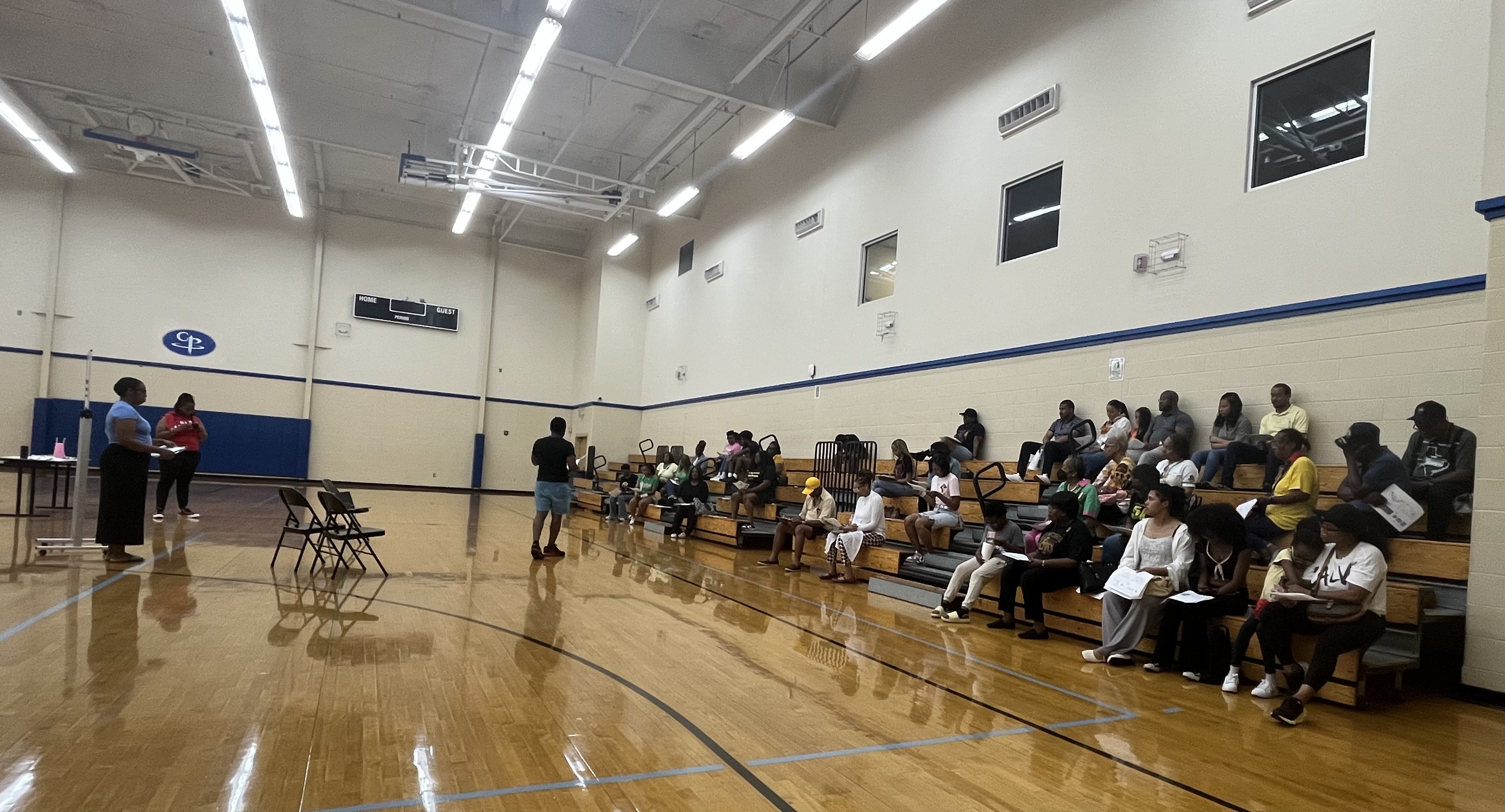
I’ve walked into the Tracey Wyatt Recreation Center more times than I can count, but today hit different. We were there for Part 2 of We the People, our intergenerational civic engagement series, and the room felt alive with purpose. Juneteenth reminds us that freedom is not just won—it’s passed down. But in order to pass it down, we have to first be able to tell each other the truth.
Today, we told the truth about disinformation, distrust, and the divides that make it harder to move as one AND provided training on how we can help the people we care about move closer to the truth when they believe false narratives. We began something sacred: the work of repairing what’s been splintered, of listening across generations, of building a bridge wide enough to carry us all. Not just toward the ballot box—but toward each other.
Disinformation isn’t new, but its tools have evolved. Today’s lies come wrapped in algorithms, delivered through funny memes and passionate hot takes, and sent straight to our loved ones’ phones. However, the impact is deeply familiar: confusion, mistrust, and division. What we know, though, is that we are more likely to believe people we care about. According to a 2024 survey by the Majority Institute, 75% of Georgians say they trust their family members and 60 percent say they trust their friends over all other messengers. That’s why this work matters.
Our We the People series is designed to help everyday people communicate more effectively with the folks around them. What we did today wasn’t just teach digital literacy—it was soul work. We helped each other name the harm, then offered tools to heal it. We’re not here to shame people who have adopted harmful narratives–we want them to leverage the trust they already share to inch them closer to the truth. Combating disinformation is less about winning arguments and more about staying connected long enough to tell each other the truth with love.
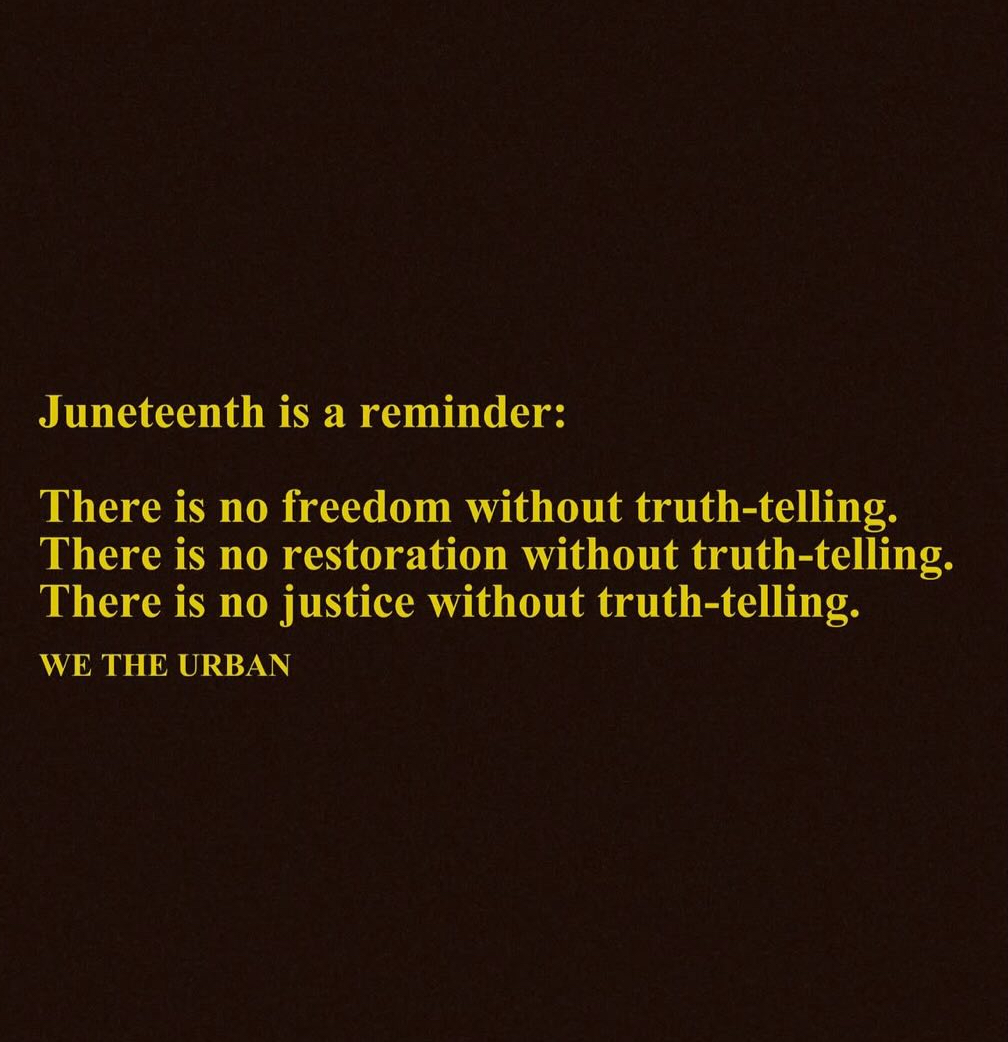
Juneteenth has always been a reminder that truth delayed is freedom denied. The very origins of the holiday are rooted in disinformation—an intentional withholding of emancipation news for more than two years after it was law. Black people in Galveston kept laboring and surviving under the weight of a lie. While the context has changed, the tactic has not. Today, our communities are still battling distorted truths—about our power, our history, and our future.
Disinformation isn’t just a political weapon—it’s a spiritual one. It clouds our discernment and limits our ability to imagine what’s possible. It isolates us from each other by breeding mistrust, and it dims the collective light we need to organize, vote, and build. That’s why this work—naming the lie, speaking the truth, and doing it in love—is so sacred. It’s not about “fact-checking” in the narrow sense. It’s about continuing the fight for freedom.
I left today feeling so fulfilled because even in the heaviness of thinking about how to “confront” people we love with hard truths—joy showed up. The event took place alongside a festival, where there was music and food and games. Before the event, I spent time hugging necks and chatting with people I value but don’t see often. People who have known Frederick since he was an infant got to gush over how big he’s gotten. After the event started, there was room for laughter and creativity. It reminded me that joy is also the truth—a truth we’ve always carried.
In a world that seeks opportunities to amplify Black trauma, joy becomes data. Joy signals to us what’s sacred. It tells us what we’re fighting for. It’s not just resistance—it’s record-keeping. When we allow ourselves to feel it together, even while we wrestle with the harms of disinformation, we’re creating proof that freedom isn’t theoretical. It’s already among us because we are a resilient and communal people. We are still here. We are still joyful. We are still building.
That joy makes room for the harder conversations, too—even about generational divides in how we vote, how we trust, how we make meaning of the world. One reason this series is so important is because misunderstandings between generations isn’t just inconvenient—it’s weakening our power.
Older Black voters often carry the weight of history like armor. Younger Black voters often question systems with a fire that comes from disillusionment. Both perspectives hold truth, but that truth won’t carry us far unless we’re willing to speak it to each other.
Truth is not just fact—it’s felt. It’s shaped by what we’ve lived and what we’ve lost. The only way to pass it on is by creating space for it to be spoken with love and with openness to collaboration, not just shouted with frustration and hopelessness.
Freedom, like truth, is a process. Like Juneteenth itself, it often comes later than it should. But we can’t stop reaching for it. We keep telling the truth. We keep practicing joy. We keep trusting that the bridge is worth building.
This work isn’t about convincing everyone to agree—it’s about making sure no one gets left behind because they didn’t hear the truth in a voice that sounded like love.
We’re not just fighting lies—we’re fighting to stay open-hearted and whole in the face of them.
The truth will indeed set us free, but first, it will demand that we trust each other enough to tell it. We owe each other that truth. It starts in rooms like the one we sat in today. It grows in conversations we’re willing to keep having. It deepens in the quiet moments where we choose not to give up on each other.
I think often about what I’m passing on to Frederick—not just in legacy, but in practice. What stories am I telling him with my actions? What kind of truth am I preparing him to hold? What kind of joy do I want him to believe he’s worthy of?
This Juneteenth, I’m holding fast to the truth we owe each other. That truth is the path to a freedom that lasts.
Soundtrack of My Life: Liberation by Earth, Wind, and Fire
 Real Middle School Mom of Atlanta