Broke-ology

Broke-ology

Wednesday night, I took a MUCH needed break from working long days (and nights) and went to see the True Colors Theatre production Broke-ology with my neighbors.

I didn’t really know what to expect from the title, but the play definitely surpassed my expectations.  Not focused just on the fact that the family was poor and how some things in life are just more important than how much money and possessions you have, this play explored many issues that hit close to home: how to take care of an illness-stricken family member, the responsibility of being close to home versus being limitless in chasing dreams, family planning, and even how people deal with death.

Since I want you to go see it (it’s at Southwest Arts Center until Sunday), I won’t get down into the details of the plot (except where it relates to my impending ramblings).  Suffice it to say that despite my sleep deprivation this week, I didn’t fall asleep for a second!

I love when art causes me to slow down and self-reflect, which definitely happened Wednesday night. One of the characters went home to Kansas City, Kansas after receiving his graduate degree from UConn.  His brother never left home, and although he works at a wings spot, he has been instrumental in helping to make sure their father, who is suffering from MS, is okay.  The younger brother, the UConn graduate, has no idea just how difficult it has been for the family and is extremely torn about staying at home and helping out but knowing he will likely get “stuck” or moving back to Connecticut after a summer position with the EPA and following his desire to teach and do environmental research with his academic mentor. Can you say para-llel? I’ve often felt the same way–except not as torn just because I go home semi-regularly since I can drive there. I’ve considered moving back home sooner than later (I at least want a second home there), especially when I see how stressed my mom gets trying to help the rest of my family.  Or even when I think of every day things that I could do if I were there that I never have time to do during my visits, like playing spades with my family like the characters were playing dominoes or learning crocheting techniques from my grandma for more than an hour or two here and there. I love being at home, and I love my family more than anything. But I’ve always been the explorer. The adventurer. I’m not quite ready to lay my roots down there. As far as my career is concerned, I could make some small strides at home, but I’m really flourishing here in Atlanta and I’m not ready for a slight career change, a veer on the road if you will.  I could work for organizations who are my clients currently, but I like being the consultant, and I love working in different communities, seeing the different dynamics.  But I always have my family in the back of my mind. Wondering if I’m being selfish. But I know in the grand scheme, I’m not because I give back and help out in my own way. But is it enough?

I got a little sentimental, though, when the older brother who has been in Kansas City the whole while told his younger brother that if he moves, he will miss all the milestones of his baby that’s on the way.  I immediately thought of my nieces and nephews, who I can’t be as close to as their aunts and uncles that are in town. I write letters, keep up with them on Facebook, spend time with them when I go home, but I’m definitely not doing nearly as much or being as influential in their lives as I would if I lived there. But on the other hand, I think back to my own aunt Vernita. She was an explorer like I am. She lived in DC until she was murdered when I was in the 9th grade. I remember vividly being so excited to see her and spend time with her when she would visit.  Although she lived so far away, I didn’t care as a child.  I can still remember her smell and her smile, even her laugh, and I would just bask in her presence. I still think about her from time to time, and it hurt me to the core when she was taken from us. I never begrudged her being away–in fact, it inspired me. My mom has told me countless times over the years that I remind her of Vernita. And that makes me feel close to her, even though I didn’t spend as much time with her as some of my other aunts and uncles.

I would keep going, but this post is getting a little long. And truthfully, I’m getting a little misty thinking about my aunt.  So… I’ll leave you with this: Cherish your family, no matter where they are. And seek to be a part of solutions, not problems.  Happy Friday, people!
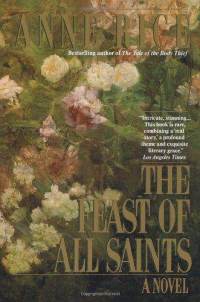
Reads and Reels: Feast of All Saints, Part I

Reads and Reels: Feast of All Saints, Part I

This weekend, I had a lovely spring-reminiscent time with my mom.  We ate dinner with my cousins, went to the Battle of the Bands, went to Sunday brunch at Pecan (who wouldn’t take my groupon without it being printed), went to the Georgia Aquarium, and spent more time with my cousin Kesha, who grilled for us.  While eating last night, we talked about our family and some of the little hush hush things about which our family never talks.  One of those issues is color.  Because of my family’s lineage (maybe one day I will expound), there exist(ed?) some superstitions and prejudices about darker hued skin and resulted in differences in how kids and grandkids were treated.

It’s always been fascinating to me.  Maybe because I am brown.  Just a pretty, smack dab in the middle, smooth, lovely brown. I’m not light. I’m not dark. I’m brown. A shade my ma said was “light enough” to escape the punishment issued to those who were “too dark.” Even when I was a kid, I wondered what I would have looked like if I had come to the world looking like any of my cousins (on my mom’s and dad’s sides–on my mom’s side, I’m one of the darkest).  We pretty much are the three shades of the Kenya dolls back in the day.  Light, medium, and dark, lol.  I can remember walking into the kitchen hearing my parents arguing about who had the most color in their history–bragging on how dark my granddaddy was or how dark my ma’s granddaddy.  Kinda weird since outside our home, I would hear other groups of blacks vying for who had the least color.  I never really understood the psychology of color.

This may be one reason that New Orleans has always been one of my favorite, mostinteresting places.  I remember the first time I read Anne Rice’s Feast of All Saints, really imagining this world of quadroons and people basing status on how far removed they were from slavery or how “whitened” they had gotten their blood. So I was very very happy to see how engaged the Atlanta group was while watching Part 1 of the DVD based on the book.  Our conversation was very lively.

We spent a good bit of time talking about the purpose and benefits of marriage. One reason, which really made me go hmmm melikey, was that marriage is an institution that assists us in moving forward and building our culture.  We talked about how marriage is used strategically, but the real question is what is the strategy?  Where are we headed? One thing I said was that if everyone did what they were put here to do, collectively we would all prosper at a faster pace than each of us individually–thus, our goal should be to marry someone that helps us in our purpose, that supports and uplifts us, that complements us.  Some people are all about marrying for love–well I would say that’s all good and fine, but it’s not.  Why? Because we may not have any control over our emotions per se, but we totally can control who we spend substantial time and energy with/on. In the movie, the strategy was a combination of their perspective of bettering their lives by “marrying” into money and into lighter skinned children who would be able to keep the cycle going. What’s your strategy?

In that same discussion, we talked at length about whether or not we have to “play by the rules” in society. Well whose rules are they?  My personal opinion is that we need to know the rules–not necessarily play by them unless that’s just what you choose to do.  If you know them, though, you can use them and play around them.

Another thing we ended up discussing (because we live in Atlanta and that’s what we discuss) was how as we get older, our pool of romantic possibilities gets smaller and smaller, not only because we’re second and third rounders (more on that in a minute), but also because our circles just overlap and overlap until the point where it’s rare that you meet someone completely new.  The answer? Some say we should start going to the gym or somewhere completely new. We’ll see.

So I’m a “second-rounder” (well, I guess I should hope that I am??).  One of our group members says that the first round of marriages occurred around 25. The second round will occur around 30; the third round, 35; and so on. And some of those first-rounders have come back around to be second-rounders because of divorces (you know, because some of those first-rounders were in starter marriages).  This was an interesting concept (and hilarious since one friend said she’s a sixth-rounder even though she’s my age).  I guess it applies to motherhood as well since a large crop of folks had babies last year, evidently drinking the same water.

Something else we discussed was how important knowing our history is.  In the movie, the main character Marcelle finds out that the Haitian Revolution wasn’t just some great, fun story to hear about–it actually directly affected his life.  He starts to make really crazy decisions because he finds out that he never knew that he didn’t know important parts of his history.  He doesn’t know who to trust–he doesn’t know what is really important–he really doesn’t even know what to do with his life.  Be who his mom and aunts want him to be? Or follow his passions?  That applies to our lives as well. We have to know where we came from, understand where certain gifts come from and how they can be used, and take advantage.  We may not have the generational monetary wealth and connections that some are born with, but we are born with certain generational gifts and lessons that we only have to seek out.

There was plenty more discussed (including how the issues in the movie have contributed to the modern-day “independent black woman”and we touched on classism a little bit–I’m sure it’ll come up more next time), and they enjoyed the movie so much that we’re moving the discussion of Disintegration: The Splintering of Black America by Eugene Robinson to March (you have more time to get it and read!) so that we can watch Part II of Feast of All Saints in February (Sunday, 2/27 at 4).  Join us! The movie is full of twists and turns! 🙂

I Love Reading

I Love Reading

So I participated in this Top Ten book listing on Shelfari today so I just wanted to share with youse all.

The top ten books of those I read this year are:

The Alchemist – Paulo Coelho
A Lesson Before Dying – Ernest Gaines
Blackgammon – Heather Neff
Soul Identity – Dennis Batchelder
Afeni Shakur: Evolution of a Revolutionary – Jasmine Guy
The Godmother – Carrie Adams
Saint Training – Elizabeth Fixmer
The Time Traveler’s Wife – Audrey Niffenegger
Them – Nathan McCall
The Notebook – Nicholas Sparks

I also read:

Soul Intent – Dennis Batchelder
Want to Start a Revolution?: Radical Women in the Black Freedom Struggle – Jeanne Theoharis and Komozi Woodard
Alice’s Adventures in Wonderland – Lewis Carroll
Dirty Little Angels – Chris Tusa
From the Browder File – Anthony Browder
The Purpose Driven Life – Rick Warren
The Help – Kathyrn Stockett
The Lost Symbol – Dan Brown

I’m currently reading:

The Witching Hour – Anne Rice
Last Lion: The Fall and Rise of Ted Kennedy – Peter S. Canellos
The Last Empress – Anchee Min

What are you reading?

Feature Friday: Afrika Book Café

Feature Friday: Afrika Book Café

I hope all of you had a blessed Thanksgiving!

Wednesday, I visited the Afrika Book Café, located at 404 Mitchell Street in my hometown Jackson, MS.  This much needed black-owned book store is in the Fondren area and has books, African inspired jewelry, African clothing, music, incense, and oils at great prices.  I had the fortunate opportunity to talk at length with one of the store owners Dr. Sizewe Chapman, who is originally from Jackson and wants to see and help the city of Jackson grow and prosper.  After discussing economic development in Jackson, he recommended I read Black Labor, White Wealth by Claud Anderson.

Another book, The Polished Hoe by Austin Clarke, caught my eye, so I purchased those two and look forward to reading them.

Now I wish I were flying back to Atlanta so I could get started!

After browsing through all Afrika Book Café has to offer, I sat on the porch with the store owners (a beautiful married couple!) and Skipp Coon and his wife (another beautiful married couple! Black love lives!).  One of the things I miss most about home is the simplicity but profundity of sitting on a porch learning from each other and talking about the world and what we can do and are doing to make it better.  Skipp, Sizewe, and I talked strategy, history, our reality, and dreams.  Sizewe, a former African history professor at Jackson State University, really inspired me to keep reading and finding historical significance and lessons as I move forward in trying to affect positive change in the black community.  Skipp, who is a rapper who speaks the truth (and someone whom you should support!), and I finished a conversation we had awhile back about colonies, and we shared stories about our experiences as blacks traveling in Europe.

Lemme tell you, my visit to Afrika Book Café is one of the highlights of my trip home.  If you’re in or near Jackson, I encourage you to check this treasure out.  It’s still a new business, so let’s make sure it stays open, serving our community by providing educational and mind-expanding resources and a space for community interaction.  Go support this small business! And while you’re at it, support Skipp Coon!

Feature Friday: Green Building

Feature Friday: Green Building

In preparation for our New Orleans’ volunteer trip, one of my group members helped me tremendously (and graciously!) by creating a card that gives green tips in building to give to organizations and residents who may be interested.  As a Feature, I’m giving Sirobe a shout out (soon to be one of less than 300 black women architects!!) and the tips in case any of you are doing any home improvements over the holidays.

Here are a couple of the tips:

  • Since appliances and electronics are responsible for 20% of the average energy bill, it pays to make your home more energy efficient.  You could receive up to $500 in rebates or $1500 in tax credits if you purchase Energy Star appliances.  Visit www.energysavers.gov for more information!
  • If you’re moving any time soon, remember that large trees are your friend.  They can help to shade your home from direct sunlight as well as block cold winds.

If you know any one building a house or anyone who is rebuilding on the Coast (or anywhere else), send them to my page.  They can contact Reads and Reels for more information.

Feature Friday: Gut Bucket Blues

Feature Friday: Gut Bucket Blues

My neighbor graciously invited to attend Kenny Leon and True Colors’ Gut Bucket Blues.  Feeling slightly important on the front row, I was captured by the story line, cursing, and phenomenal music (although pretty upbeat to be the blues, but really great nonetheless).  If you haven’t seen it, you simply must, and you only have this weekend to catch it before it’s gone.

I have no idea who this person is. The actress playing Bessie doesn't look like this, and the real Bessie doesn't look like this. This is the only thing that threw me off about the play. (But still go see it.)

I had heard of Bessie Smith, but I had never really known anything about her story.  I just knew she was considered a great blues singer.  Well, this lady had a loud, crazy, interesting life, and it made me wonder if some people have soap opera lives just so that someone in a future generation can become inspired and create a production like David Bell did.  Being the inquisitive person that I am, when I got home, I googled her to see how much of the play was true to her life, and it seems that all of it was based on what really happened except the way she ended up in Atlanta to start her career.

Bessie Smith started out as a orphan being cared for by her abusive sister Viola who would lock her in the “shit house” (outhouse) as punishment.  She and her brother Clarence made money by singing in front of businesses.  Bessie eventually got “discovered” by the infamous Ma Rainey and learned stage presence from her. Once she launched her solo career, Bessie sold her songs like hot cakes.  She was the highest paid black entertainer in her time.  BUT history is still repeating itself.  She wasted her money on stuff, a bunch of meaningless-in-the-grand-scheme stuff, on illegal booze, and on her wack, abusive husband.  Seriously, by the time she passed away, she left nothing–didn’t even have enough to buy herself her tombstone.  And according to Wikipedia, the money was raised twice to buy her one (she had thousands at her funeral–people LOVED this foul mouth, hoochie coochie woman who I started to love during the play), but her crazy, awful husband (that seems much worse than Ike was) pocketed it.  She passed in 1937 but didn’t get a tombstone until 1970.  The highest paid black entertainer of her day.  The Empress of the Blues.  No tombstone for all those years.  And the cycle continues.

I really do encourage you to go see Gut Bucket Blues. It’s full of drama, a great story, and AWESOME singers.  And if you’re anything like me, you will want to know more when you leave!  You won’t be disappointed.  I’ll leave you with some videos of the legends this play is about.

Listen to those lyrics.  Such a sad reality.  I guess that’s why they call it the blues though. :-/

I feel her, but maybe it shoulda been someone else’s business. 😦

Happy Friday!

My Time in New Orleans

My Time in New Orleans

Where were you when Hurricane Katrina wreaked havoc over the gulf coast communities and when the levees broke? I was in Atlanta, worried sick about my friends and their families and about the city I have had a sincere love for since I was a little kid—New Orleans. I remember not being able to get in touch with anyone for weeks because the network was down. And I remember feeling like there was nothing I could do. I did clothing drives for my friends, but it never seemed to be enough.

Well, five years have passed since that disaster that hit so very close to home and affected so many people that I personally know. And still, the city has not recovered. There are still empty but overgrown lots, houses that are abandoned, people that can’t return yet. There’s still so much to do, and this past weekend, I helped do it.

I led a group of 15 volunteers—3 traveling from here in Atlanta, 2 from Jackson, MS (plus a hubby–shout out to Trey), 1 from Vicksburg, MS, 8 from in and around Hattiesburg, MS, and 1 from Chicago, IL. We worked with Hands on New Orleans in two areas of town. And boy, were those two volunteer projects different.

On Saturday, we went to Harvey, Louisiana, which is on the West Bank of New Orleans. The project was with the Latino Farmers Cooperative of Louisiana to move their Esperanza Neighborhood Farm. Not just develop one—move it. From one parcel of land to another.  I walked into a land dispute that I had no knowledge of until we showed up to work. The organization had received an acre of land from a board member, but they didn’t go through the official channels of learning where the property lines were. Turns out they spent months creating a garden on someone else’s land—someone who didn’t want them there. So much in fact that the owner of the land showed up with police to make sure we were moving the garden, and not tending to it.

That whole situation was a mess.  Both sides were wacko.  She was wacko because she felt like the owner owed her something.  No ma’am.  Her organization should have done their due diligence to ensure they understood where the property was.  So she kept calling this man a bad person because he didn’t want to lease her the land for the three months it would take to reap the harvest.  It’s his land so he has a right to say no.  But going by her behavior and attitude when the owner pulled up (she was even rude to the police who weren’t at all mean when they pulled up), it’s clear that she was not pleasant ever in the situation.  So much for the attracting bees with honey because I’m sure when he (a black man) first pulled up to ask what they were doing, a group of white and Latino people working on his land, they probably acted like he was the one who is crazy.  He ordered them to move the garden asap. Now he’s crazy too, though.  First of all, she did him a favor really because the land was very much not taken care of before they made their mistake, so he really won out on that end of the spectrum.  However, he ordered her to move the land, but was threatening to charge her with trespass that morning (not us, her, lol–we 15 were not going to jail over voluntarism.  No. indeed.).  Well, sir, she can’t move the dang garden by osmosis.  We had to be on the property to uproot it all.  Once we, the sane and calm and unbiased black people, explained that to him and the police, though, he exhaled, still a little tightly wound, but just said it needed to be gone by the next day.

So my group of 15 had the task of moving a sign that had been cemented in the ground, uprooting a fence, clearing the land on the property that actually was for them (and by clearing I mean moving loads and loads of vines and trash), preparing it for soil, digging up and moving the soil from the original garden, and finally, moving and replanting the crops. It was very hard work, let me tell you, and the project leader was more like an overseer or slave master than a volunteer coordinator. She was barking orders at us and showed little to no appreciation even though we did in 5 hours what took weeks.  I think I knew it was a wrap when she asked us to relieve the Dillard students who had only been there for an hour compared to our four, and wanted us to stop planting to start back digging.  Oh, and did I mention she had stopped working because some students from Princeton had come to interview her for a study they’re doing about farming and community gardens.  Did I mention that the owner of the land of the first garden is attempting to sell it to a mechanic shop (we found that out from a neighbor)?  So… if that happens, surely the garden will not survive behind that. We left feeling borderline defeated and wondering if we had wasted a day.

The bright side of things is that the whole group felt some kinda way after leaving so we decided to unwind at a nearby daiquiri shop, where we played some New Orleans classics (so classic that the owner of the shop turned the music up louder and customers were coming in bobbing their heads–woot woot for the DJ (me)) for a friend who had never been to New Orleans, had Jello shots, played pool, and of course, drank daiquiris.  The girls left there and went to a nail salon.  We keep it pretty, yanno.  We have no idea what the guys were up to.  Later, we went to the Quarter, ate heartily, then looked at all the Halloween costumes on Bourbon St.  It was a great night.

Sunday was a totally different experience, however. We went to the Lower 9th Ward, which is one of the most affected parts of the city because it’s near the levees. When we arrived at the Lower 9th Ward Village (which I plan to feature this Friday), we were all wary, ready to leave the project, straight throw the deuces, as soon as we were done with our assignment. Turns out we stayed 2 hours longer than the project was supposed to be. The morning started with an inspirational introduction from the Village CEO Mac McClendon, who started the community center to help his neighborhood after losing all his material things, including a house he had spent months renovating with his own hands. He explained to us what he went through during the storm and its aftermath, looking for his family, dealing with the smell of death when he returned, finding out that silence is a deafening sound. He said that hearing a car was a treat because there were literally no sounds—no birds chirping, no dogs barking, no crickets chirping, nothing. Out of hopelessness, he found his purpose in life and now, he’s running this center, still rebuilding his own life, but giving to his neighbors. Because there’s a law saying that if the grass is over 18 inches, a lot can be seized, we spent our morning cutting grass and weeds. Although the project wasn’t as “glamorous” as creating a garden, we felt like we had become a part of this community. After we were done, we spent two hours talking to Mr. McClendon about his life and experiences, with his younger brother who is the Program Director at the center, and with a couple of elderly residents who just wanted to pick our brains and get us thinking. We didn’t want to go, but we had to so that we could get home.  Here’s a link to a clip of the convo we had with Mr. McClendon.

The difference between those two projects illustrates the true meaning of community building—we volunteer, but why? To do good, yes, but more importantly, to build and restore communities. When I go back to New Orleans again to work, I’ll definitely be going back to see what my new friends at the Lower 9th Ward Village need. I won’t give up on helping other parts of the city, but I definitely want to dedicate at least part of my time to the ongoing efforts in the Lower 9th Ward.  I hope that next time you will come with us. 🙂  Here are links to the pictures.  Oh the memories.

Ranada’s Reads and Reels FB Photo Album

J Photo Group’s Flickr Album

MLM: What’s Your Dream?

MLM: What’s Your Dream?

Well, my dream is to make a profound positive impact on the black community. And through Reads and Reels, I can see some of that coming to fruition.  This weekend, I led a group of 15 volunteers in New Orleans as we participated in the ongoing rebuilding efforts.  It was a humbling, educational, inspirational, reassuring, lesson-learning, comical, friendship-building time, and I’m so glad that I had the idea and acted on it.  I’ll definitely be doing it again very soon.  I’m uploading pictures and sharing stories over the next few days.

For Memory Lane Monday, though, I want to share this piece I sent to friends on May 4, 2007 after a sermon I heard.

“Look, this dreamer is coming!…Let us…kill him.” Genesis 37:19-20

What’s your dream?

Everybody has a dream.  What’s yours?  If you could do anything, what would it be?  Most of us don’t achieve great things because we give up, we fall short, we get off track, we settle, or we dream too small.  Only two things stand in your way: dreaming it, then doing it.  Have you dared to dream, really dream?  If something is within your apparent reach, it isn’t a dream.  If it doesn’t stretch you, cost you, or involve risk, it isn’t a dream.  Dreams change you even as they change the world around you.

Maybe you’re listening to critical people. Remember the story of Joseph?  He dreamed big dreams.  God-given dreams.  And what was the response of his brothers?  They said, “Look, this dreamer is coming!… let us… kill him.”  People who aren’t pursuing their own dreams are usually the first to criticize people who are.  So, who are you listening to?

Maybe you’re afraid to dream too big. You don’t want to fail.  Nobody does.  But “safe living” leads to regret.  Theodore Roosevelt said, “Far better it is to dare mighty things, to win glorious triumphs, even though checkered by failure, than to rank with those poor souls who neither enjoy much nor suffer much because they live in the gray twilight that knows neither victory nor defeat.”  What’s the worst thing that could happen if you pursue your dream and don’t achieve it?  You could end up where you are now.  And what’s the best thing that could happen?  You could find yourself in new territory, enjoying new blessings, living the life God meant for you to live!

So, what’s your dream?  Are you pursuing it?

Feature Friday: Twist

Feature Friday: Twist

As Drake says, “Better late than never.”  So here’s my review of Twist at the Alliance Theatre since I’m New Orleans-bound in just a couple of hours.


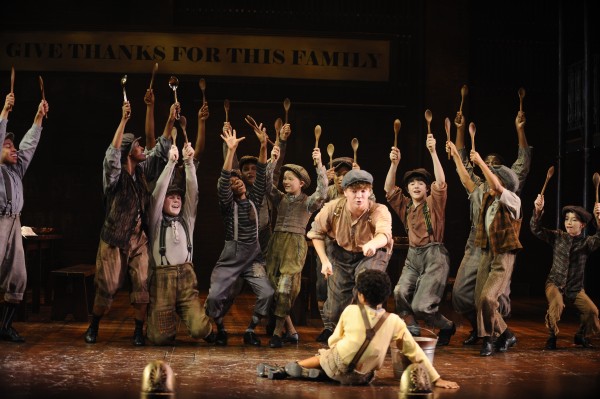
Overall, the musical was worth seeing.  This “twist” on the story of Oliver Twist was full of great music and great storylines. A result of an interracial couple in New Orleans in the early 1900s that experiences the wrath of a mob, Twist is born in the orphanage that his mother drags herself to while dying after watching her fiance carried off.  Twist is ridiculed for being a “half-breed” by the other orphans as is sold to a funeral parlor director.  During his short stint with the funeral home, Twist learns that he has a great dancing talent and shows out during a second line before running away and joining a gang of lost boys who are selling libations during Prohibition for a guy who turns out to be the dance partner of Twist’s deceased father.  This guy also just happens to be booed up with the girl who delivered Twist and got a locket from his mother before she died, which the girl still had after all those years.

The story becomes twisted when the gang leader, who also owns a cafe in the Quarter, is approached by Twist’s uncle, who happened to be a member of the mob who killed Twist’s parents.  The uncle learns that as long as he has no proof that the baby of his sister is dead, he can’t get her part of their inheritance.  So he tries to buy Twist from the gang leader, who at first, despite his girlfriend’s pleas, heavily considers the agreement.  Thank goodness for the family attorney, who just so happened to love the work of Twist’s father and who has an affinity for protecting youth, who steps in and gives Twist a safe and happy home through all of this drama.

The two main issues that came up in the musical included of course, the lack of belonging for interracial people on either side of the spectrum and the need for adult influence and love in the lives of children.  Now, I had a slight problem with the interracial aspect of things.  In New Orleans as well as in other parts of the world, interracial people were seen as a notch up from black.  So although they were not accepted by white people, they were not necessarily “rejected” by blacks–many times, they chose not to be grouped in, instead going by names like quadroon and octoroon.  Interracial people in these days of New Orleans, many times had a choice between living among blacks or living in this created world of their own, where the women became concubines of Frenchmen who traveled back and forth between lands.  So it kinda disturbed me that in the musical, blacks and whites were banding together (getting along although they killed Twist’s parents for banding together) to ostracize Twist.  It was just a really weird dynamic.  For instance, in the orphanage scene, the black and white kids were in cahoots to make Twist’s life a living hell.  Now, this may have been a little more believable if  the white kids were sitting at a table of their own and the black kids at the other, and neither would give Twist a seat.  But for them all to be seeming to be loving each other across racial lines but hating Twist?  No sense.

Most importantly, though, the production did a good job of illustrating that children will accept love anywhere they can get it.  Even if it’s not under great circumstances.  It made me really consider what I think about whites adopting black children vs. blacks adopting them.  I mean, in the grand scheme of things, there are so many children out there that need love that I don’t really think about what race the adopting parents are–I just want them to be good parents who really just want to love kids.  Yes, there’s the issue of ensuring culture in a child, but I’d rather a child be placed with awesome white parents than sucky black parents (as would have been the case in the production–a single well-off white attorney who loves children and can actually tell Twist about his father’s legacy versus a black couple that is shacking up and sending kids out in the streets everyday to sell illegal liquor).  But the world isn’t so black and white.  There usually aren’t situations where a kid has a choice between the exact same family besides one being black and one being white.  So, I just say, those of you out there who really have the resources and the time and the love to adopt a child, go for it.  You won’t hear anything from me, regardless of your race or the child’s race.

Again, overall, the play was enjoyable.  Check out the Alliance Theatre to see what they have this season.  Reads and Reels will be seeing Nacirema Society mid-November, and I can’t wait!

It’s time for Halloween and my volunteer trip!

It’s time for Halloween and my volunteer trip!

I have no costume for myself as of yet, but I hope you like my “spooky” look on my blog.

I hope to have an AWESOME time this Halloween weekend.  I’m going to New Orleans to volunteer, and I am too excited.  New Orleans is my fave fave fave city, so I’m happy to have the chance to pitch in and do my part.  I hope to do this again next year.

There’s alot on my mind in terms of politics, relationships, fashion, and much more, but it’s not in sharable format.  So until I can make some sense of all this hodgepodge in my head…

Here’s a video about Post-Katrina Lower 9th Ward, where I’ll be working Sunday morning.

And here’s one of my fave party songs, which is from New Orleans.  I’ve been dancing to this mug for YEARS.  Some songs are just classics. 🙂