More Violence

More Violence

I would be remiss if after my last post I didn’t say anything about DJ Henry, the slain Pace University student. Three initial thoughts came to mind as I heard it discussed on the Tom Joyner morning show.

1. As much as I’m on the internet reading the news, I had never heard of this, an incident that occurred in October. So I just wonder how often this type of thing happens, and we just don’t know about it. Seriously, we need to do something. Whether it be training our young men on how to deal with the police, whether there is just cause for the encounter or not. I’ve been in a situation myself where I’ve been harassed by the police, and I was calm for awhile until I just lost my patience.  I wasn’t hit or anything, but I was given 3 tickets, which were thrown out when I went to court, but I recognize that a-it was a luxury that I was able to take time off work to go to court and b-that I knew my rights and thus knew the tickets wouldn’t hold up if I contested them.  Just like there was training for sit-ins, maybe we should have trainings for police stops. It can be infuriating when you feel like you’re being picked on, but we really have to learn how to go along to get along sometimes–especially if death or wrongful imprisonment is a possibility. And we need to know what the laws and ordinances are.  (And I say all that not to say what I think happened in this situation–I really don’t know what to believe happened to DJ Harvey.  I do know I haven’t heard or read anything yet that justified killing the young man.)

2. I’m happy that black media is covering this.  We really need to support and take advantage of the media outlets we do have to increase awareness and spur action.  We do not/should not read everything we read (as was the case of Shirley Sherrod), and we need to know who is reliable and where we can really make sure our voices are heard.

My heart goes out to the family and the school body as they figure out what actually happened that fatal night.

Racism in America, not just MS

Racism in America, not just MS

The inspiration for this post started with this article.  A few days ago, a friend of mine from Greenwood texted me to tell me there had been a lynching in her hometown.  A couple of days later, the article came out suggesting it was a suicide.

In the words of Ed Lover, C’MON SON, get the eff outta here with that bs.  Do you seriously want me to believe that?

The other issue I have with this article is that there are NO comments.  Now, I am a dedicated comment reader because comments can really paint the picture of who is living in this country and how they see the world.  I’ve winced a many day at comments that I’ve read on an array of topics, so I was prepared to read some on this one, but… Crickets.  What’s up with that?

Let’s call a spade a spade.  This is yet another example of hatred and racism in this country.  In 2010, the fact that someone could be lynched is a travesty.  And the fact that it hasn’t hit all the major news outlets yet is another.  But, I must admit, a small part of me is glad it hasn’t.  Wanna know why?

I get tired of the perpetuation of the negative stereotype of my home state.  I started this group on Facebook and am very happy to see that there are over 13,000 members in it.  Why?  Because so many people, outside of the state and even in the state, think that MS is the hub of all evil in the country and that nothing good comes from it.  Ok, that’s a slight exaggeration, but still.  I’ve heard people from all across the Bible Belt give MS grief as if their states don’t come with their own transgressions.  If you don’t know much about Mississippi and all of its contributions, you should browse this site for a few minutes.

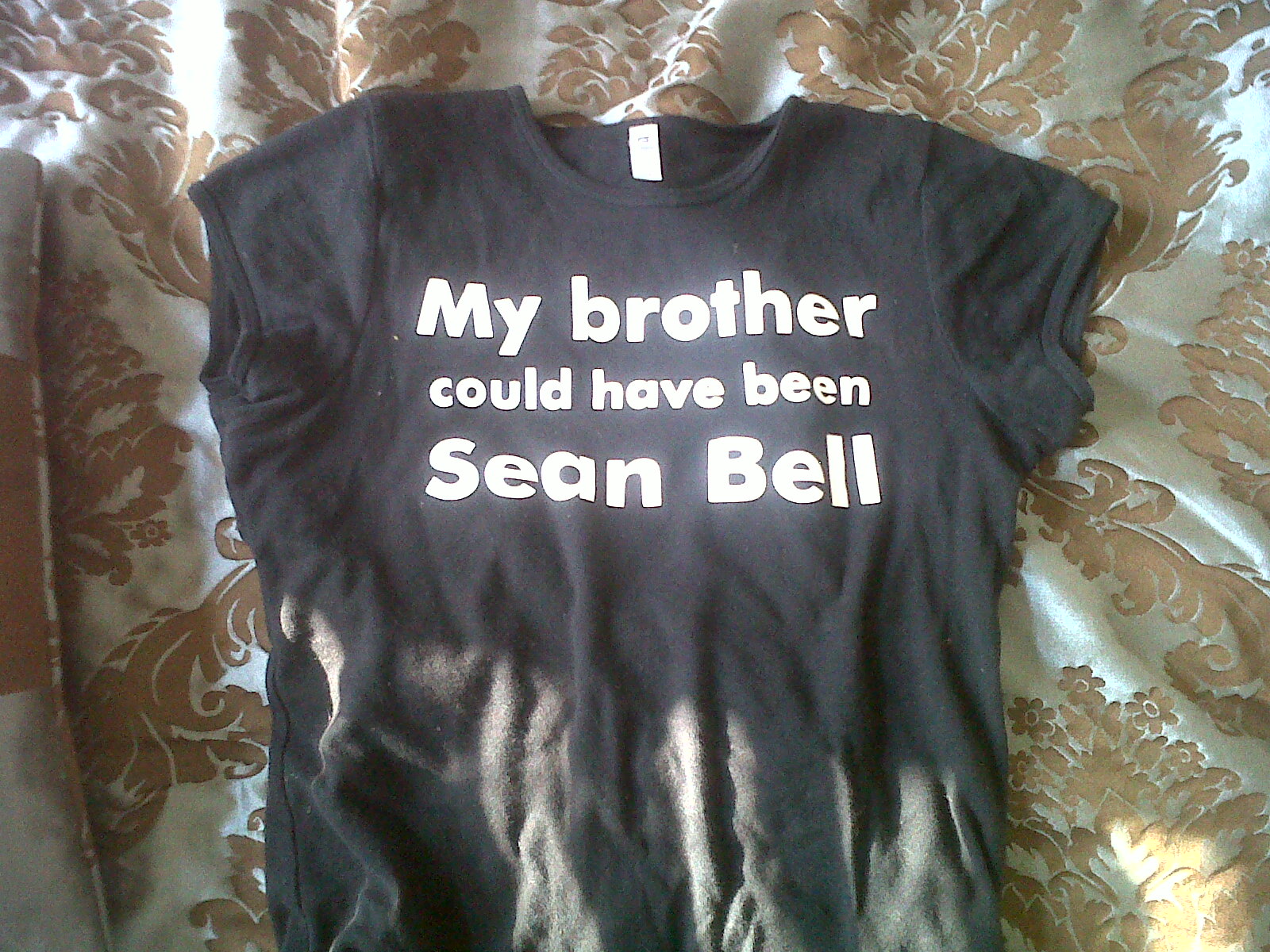
Now, let’s be clear.  I do not for one second believe that Mississippi doesn’t have its problems or that it’s a perfect place.  And I don’t need another lesson on Mississippi history.  I got it along with southern history, American history, and Black history.  I just want to intimate that racism and the brutal killings of our black men is a NATIONAL problem.  Oscar Grant being shot in the back while unarmed is just as horrible as this poor man who was walking through the wrong neighborhood and somehow (since it could be self-inflicted <heavy sarcasm>) ended up hanging from a rope in a tree.  However, no one says that California is a hotbed for racism.  Sean Bell being gunned down by the police before his wedding?  Yep, not cool.  But no one blames it on the fact that he was in New York.

How about the man who was shot in the head and dragged by a car in South Carolina?  Are you getting my drift?

Now that I’ve gotten that out of the way.  I want to know who out there cares.  What’s going to happen?  What is the answer?  How can we stop all this violence and hatred?  Will people be marching to the Mississippi Delta?  Or will this slide under the radar like many other issues?  We as Americans really need to address this and while we’re at it address the disproportionate number of black men in prison and what’s wrong with our system.  We can’t just sit around and wonder when the next brutal “accidental” murder will occur.  It’s time out for thinking that if we cover our eyes, not only will we not see it, but it’ll stop happening.  We need to wake up and see that it doesn’t just affect the families of the victims–it affects us all.  So let’s get to work.

Lifting us all up

Lifting us all up

I got a couple comments offline about my iRock post that were surprisingly negative.  They were from guys who said that they were tired of us black womenfolk uplifting ourselves and what about the fellas…  Weeeeeeellllll, I didn’t know that uplifting someone equated downplaying someone else.  I believe that uplifting women is one major key to uplifting a community.  In the media, we have been hearing so much negativity, especially us educated, supposedly too independent, grouchy, emasculating, career-focused black women.  I know so many awesome black women who don’t know just how awesome they are, and in turn, the people around them don’t necessarily see how awesome they are because they downplay themselves.  So I wanted people to come on here and celebrate how they rock.  Men could too, if you rock.  We don’t hate around these parts–we acknowledge how important both men and women are to our community.  So c’mon.  Can you give us some love without feeling neglected?

Malcolm X once said that black women are the most disrespected, unprotected people in America.  Sometimes I wonder how we got to the point where YouTube video battles about the contention between black men and women became just as mainstream as harping on negative statistics about us every chance possible without providing some solution besides date whoever winks at you.  I don’t know what the solution is, but we’ve got to get back to a point where we respect each other.  I was listening to Michael Eric Dyson today, and a guest on his show, Dr. Raymond Winbush, author of The Warrior Method: A Parents’ Guide to Rearing Healthy Black Boys, said something that really struck a cord with me.  He said that we so often use the phrase, “It takes a village to raise a child,” but we never talk about how our village has been torn apart or about how to rebuild it. Ok, I may have added some of my own into that, but you get the picture.  I want to know how we can improve the overall relations within our community (I know not ALL people men-bash or women-bash so don’t start with me please and thanks).  How can we stop the finger pointing and start the embracing?  We all have stuff to work on–it’s not a one-sided issue.  What can we do today to ensure that our kids will respect each other?  I’d love to hear your thoughts.

This next video is to add to that convo about guys who love to call out women who aren’t smiling as they walk down the street. Lol–it’s not that deep on a daily basis, but still something to think about.

And y’all know I love me some good music.  This is dedicated to all my girls who rock (even if you didn’t come tell me why, lol).

Feature Friday: Green Building

Feature Friday: Green Building

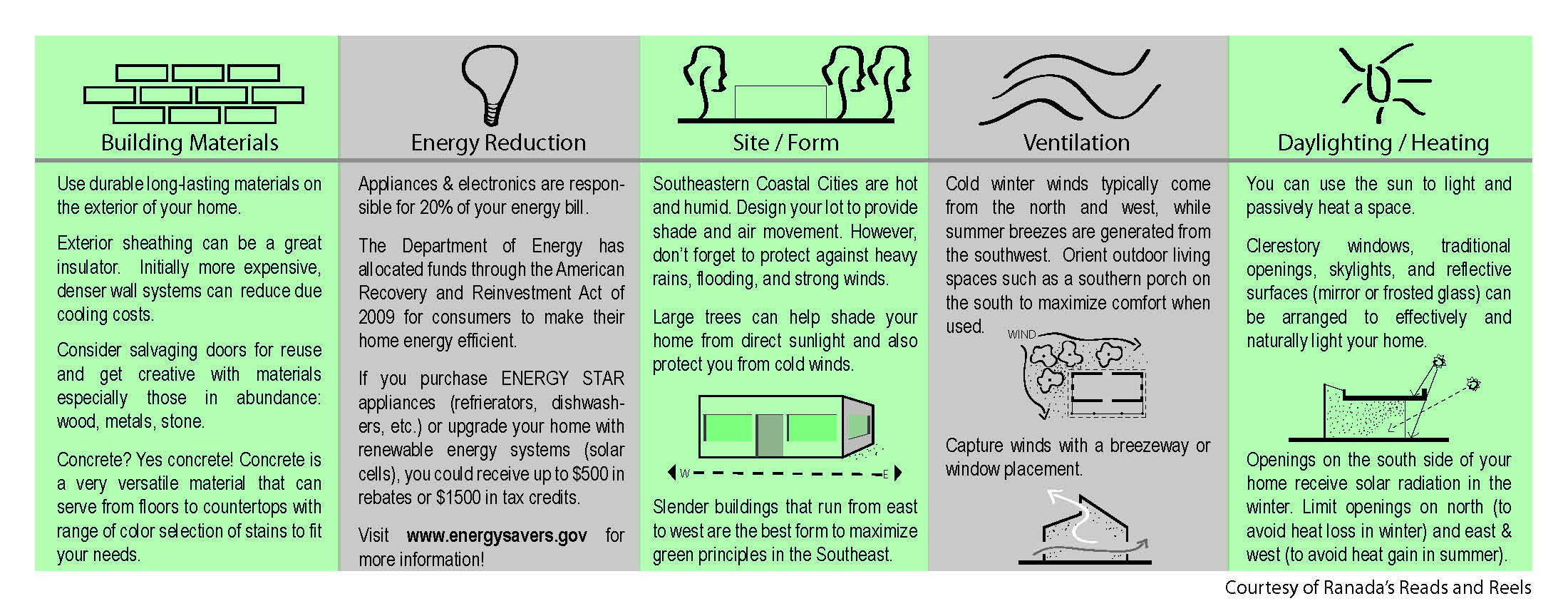
In preparation for our New Orleans’ volunteer trip, one of my group members helped me tremendously (and graciously!) by creating a card that gives green tips in building to give to organizations and residents who may be interested.  As a Feature, I’m giving Sirobe a shout out (soon to be one of less than 300 black women architects!!) and the tips in case any of you are doing any home improvements over the holidays.

Here are a couple of the tips:

  • Since appliances and electronics are responsible for 20% of the average energy bill, it pays to make your home more energy efficient.  You could receive up to $500 in rebates or $1500 in tax credits if you purchase Energy Star appliances.  Visit www.energysavers.gov for more information!
  • If you’re moving any time soon, remember that large trees are your friend.  They can help to shade your home from direct sunlight as well as block cold winds.

If you know any one building a house or anyone who is rebuilding on the Coast (or anywhere else), send them to my page.  They can contact Reads and Reels for more information.

My Time in New Orleans

My Time in New Orleans

Where were you when Hurricane Katrina wreaked havoc over the gulf coast communities and when the levees broke? I was in Atlanta, worried sick about my friends and their families and about the city I have had a sincere love for since I was a little kid—New Orleans. I remember not being able to get in touch with anyone for weeks because the network was down. And I remember feeling like there was nothing I could do. I did clothing drives for my friends, but it never seemed to be enough.

Well, five years have passed since that disaster that hit so very close to home and affected so many people that I personally know. And still, the city has not recovered. There are still empty but overgrown lots, houses that are abandoned, people that can’t return yet. There’s still so much to do, and this past weekend, I helped do it.

I led a group of 15 volunteers—3 traveling from here in Atlanta, 2 from Jackson, MS (plus a hubby–shout out to Trey), 1 from Vicksburg, MS, 8 from in and around Hattiesburg, MS, and 1 from Chicago, IL. We worked with Hands on New Orleans in two areas of town. And boy, were those two volunteer projects different.

On Saturday, we went to Harvey, Louisiana, which is on the West Bank of New Orleans. The project was with the Latino Farmers Cooperative of Louisiana to move their Esperanza Neighborhood Farm. Not just develop one—move it. From one parcel of land to another.  I walked into a land dispute that I had no knowledge of until we showed up to work. The organization had received an acre of land from a board member, but they didn’t go through the official channels of learning where the property lines were. Turns out they spent months creating a garden on someone else’s land—someone who didn’t want them there. So much in fact that the owner of the land showed up with police to make sure we were moving the garden, and not tending to it.
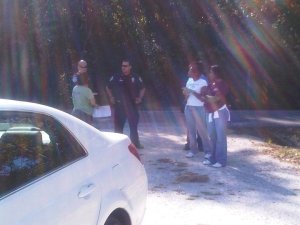
That whole situation was a mess.  Both sides were wacko.  She was wacko because she felt like the owner owed her something.  No ma’am.  Her organization should have done their due diligence to ensure they understood where the property was.  So she kept calling this man a bad person because he didn’t want to lease her the land for the three months it would take to reap the harvest.  It’s his land so he has a right to say no.  But going by her behavior and attitude when the owner pulled up (she was even rude to the police who weren’t at all mean when they pulled up), it’s clear that she was not pleasant ever in the situation.  So much for the attracting bees with honey because I’m sure when he (a black man) first pulled up to ask what they were doing, a group of white and Latino people working on his land, they probably acted like he was the one who is crazy.  He ordered them to move the garden asap. Now he’s crazy too, though.  First of all, she did him a favor really because the land was very much not taken care of before they made their mistake, so he really won out on that end of the spectrum.  However, he ordered her to move the land, but was threatening to charge her with trespass that morning (not us, her, lol–we 15 were not going to jail over voluntarism.  No. indeed.).  Well, sir, she can’t move the dang garden by osmosis.  We had to be on the property to uproot it all.  Once we, the sane and calm and unbiased black people, explained that to him and the police, though, he exhaled, still a little tightly wound, but just said it needed to be gone by the next day.

So my group of 15 had the task of moving a sign that had been cemented in the ground, uprooting a fence, clearing the land on the property that actually was for them (and by clearing I mean moving loads and loads of vines and trash), preparing it for soil, digging up and moving the soil from the original garden, and finally, moving and replanting the crops. It was very hard work, let me tell you, and the project leader was more like an overseer or slave master than a volunteer coordinator. She was barking orders at us and showed little to no appreciation even though we did in 5 hours what took weeks.  I think I knew it was a wrap when she asked us to relieve the Dillard students who had only been there for an hour compared to our four, and wanted us to stop planting to start back digging.  Oh, and did I mention she had stopped working because some students from Princeton had come to interview her for a study they’re doing about farming and community gardens.  Did I mention that the owner of the land of the first garden is attempting to sell it to a mechanic shop (we found that out from a neighbor)?  So… if that happens, surely the garden will not survive behind that. We left feeling borderline defeated and wondering if we had wasted a day.

The bright side of things is that the whole group felt some kinda way after leaving so we decided to unwind at a nearby daiquiri shop, where we played some New Orleans classics (so classic that the owner of the shop turned the music up louder and customers were coming in bobbing their heads–woot woot for the DJ (me)) for a friend who had never been to New Orleans, had Jello shots, played pool, and of course, drank daiquiris.  The girls left there and went to a nail salon.  We keep it pretty, yanno.  We have no idea what the guys were up to.  Later, we went to the Quarter, ate heartily, then looked at all the Halloween costumes on Bourbon St.  It was a great night.
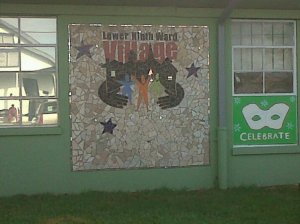
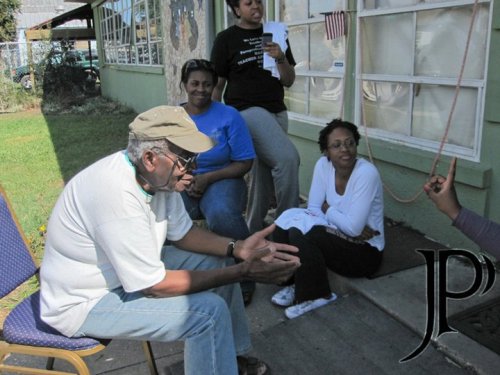
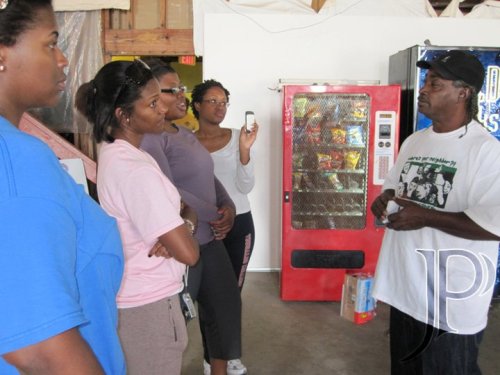
Sunday was a totally different experience, however. We went to the Lower 9th Ward, which is one of the most affected parts of the city because it’s near the levees. When we arrived at the Lower 9th Ward Village (which I plan to feature this Friday), we were all wary, ready to leave the project, straight throw the deuces, as soon as we were done with our assignment. Turns out we stayed 2 hours longer than the project was supposed to be. The morning started with an inspirational introduction from the Village CEO Mac McClendon, who started the community center to help his neighborhood after losing all his material things, including a house he had spent months renovating with his own hands. He explained to us what he went through during the storm and its aftermath, looking for his family, dealing with the smell of death when he returned, finding out that silence is a deafening sound. He said that hearing a car was a treat because there were literally no sounds—no birds chirping, no dogs barking, no crickets chirping, nothing. Out of hopelessness, he found his purpose in life and now, he’s running this center, still rebuilding his own life, but giving to his neighbors. Because there’s a law saying that if the grass is over 18 inches, a lot can be seized, we spent our morning cutting grass and weeds. Although the project wasn’t as “glamorous” as creating a garden, we felt like we had become a part of this community. After we were done, we spent two hours talking to Mr. McClendon about his life and experiences, with his younger brother who is the Program Director at the center, and with a couple of elderly residents who just wanted to pick our brains and get us thinking. We didn’t want to go, but we had to so that we could get home.  Here’s a link to a clip of the convo we had with Mr. McClendon.
The difference between those two projects illustrates the true meaning of community building—we volunteer, but why? To do good, yes, but more importantly, to build and restore communities. When I go back to New Orleans again to work, I’ll definitely be going back to see what my new friends at the Lower 9th Ward Village need. I won’t give up on helping other parts of the city, but I definitely want to dedicate at least part of my time to the ongoing efforts in the Lower 9th Ward.  I hope that next time you will come with us. 🙂  Here are links to the pictures.  Oh the memories.

Ranada’s Reads and Reels FB Photo Album

J Photo Group’s Flickr Album

Have you voted?

Have you voted?


If you haven’t voted already, what are you waiting for? Here are links to some previous posts about voting.

Are you ready for the midterm elections?

GA Primary: Election Results

Are you ready for the primary?

Here are some other useful links.

MoveOn.org Election 2010 Voting Info

CNN Election Center

Washington Post Vote Tracker

Usually I’m a little impatient when it comes to standing in lines, but this morning, I was very happy and gleeful to stand in line to vote. It was really encouraging. I hope the expected turnout is surpassed greatly. Some ask why I didn’t early vote–there’s just something about voting on Election Day that makes me feel empowered. I only early vote when I know I can’t fit it in on the actual day, but I totally support making voting more accessible.  I just like being in the thick (or thin, in which case I frown) of things.

I’m also very very ecstatic to see that people have been following my suggested links to the Secretary of State website, the layman’s version of the proposed amendments, and info about candidates.  🙂

Anywho, if you’ve voted, ^5!!! If you haven’t, you have till 7 pm. Get it done!!

Almighty Debt

Almighty Debt

So last week, Reads and Reels along with TEO hosted an advance screening of CNN’s Black in America: Almighty Debt, which is airing in full tomorrow night. The event was well-attended, and people definitely had lots to say about the segment.  Here are some highlights.

  • Many people in the group, while they appreciated the topics touched on in Almighty Debt, felt that there should have been an added focus on those who have triumphed over debt.  They expressed that instead of showing all our problems, showing people who have overcome debt issues would have provided some hope to the watchers.  Some people thought the segment was realistic, and some thought it didn’t represent enough of the black diaspora.
  • In the piece, Pastor Soaries said that debt is a bigger problem than racism.  Some agreed, but others did not.  One attendee said that this debt problem is a byproduct of racism, and that there are still systems that encourage a disproportionate affect on our community in comparison to others.  She even made reference to a quote from the first Black in America: “When America has a cold, Black America has the flu.”  In essence, financial issues affect us greater–as Julianne Malveaux said during her interview, many of us are middle class by income, not by wealth.  So when stuff happens, we don’t have as much cushion, and we’re more easily knocked out of middle class.  It’s troubling that the wealth gap between whites and blacks is $75,000.
  • One point that was made over and over again in the segment as well as in our discussion is that we get emotionally attached to our stuff.  Due to a long history of not having much, it was said that we spend a lot of our money trying to catch up and show that we’re worthy of having stuff — stuff, as in houses, cars, clothes, designer purses, etc., that we can’t or won’t let go of when times get tough.  I shared with the group that in 2007, black buying power was $845 billion and was expected to top $1.1 trillion by 2012.  What are we doing with this money?  Why aren’t we leveraging it? Why are we buying tons of stuff instead of investing in our communities, in black businesses, in our education systems, in programs that will help us?
  • One very important topic of this new segment of Black in America is the church’s role.  Should the church be focused on salvation–getting people to heaven–or should it also be teaching and advocating for our communities–helping people on earth?  (Y’all know I think it should be doing both.)  The church, which used to be the single most important institution in our communities, should be investing in building up our communities.  I am in support of those churches, including the one in the documentary, who have community foundations that buy property and help people find jobs and teach financial literacy and help people get out of debt and hold entrepreneurship workshops and the like.  We need to think beyond our individual selves and get back to thinking long-term for our community.  We know what many of our problems are–so let’s get to fixing them.

There was so much more that was said, and there is so much to be said–and to be done.  Overall, I think the screening, and I’m sure the complete show tomorrow, fulfilled an imperative purpose: to get us talking about what we need to do become better financially.  It’s a personal and community problem–we each have a responsibility to get our own lives in order and make better decisions; and we all need to chip in and do something to position future generations to be better stewards of money and to understand how to build wealth, not just increase income, or as one participant said: “make money while we sleep.”

One thing that I’d like to see expanded and implemented to a wider audience is our ESP Kids Club, where members of TEO along with some brothers of Alpha Phi Alpha teach middle school kids on Saturdays about financial literacy.  The program is so enriching that some parents have asked to sit in because their kids were going home sharing information that the parents didn’t know!

There’s an information gap from which our community suffers gravely.  We need to fill it in order to empower the black community economically.  We have to have the foresight to ensure that our $1.1 trillion will be spent creating products, innovating, and growing assets, not just being consumers.

CNN’s Black in America: Almighty Debt

CNN’s Black in America: Almighty Debt

Reads and Reels and Tau Epsilon Omega Chapter of Alpha Kappa Alpha Sorority, Inc., are hosting this screening next week. 🙂

Feature Friday: Small Businesses

Feature Friday: Small Businesses

I’m no stranger to the pros and cons, benefits and trials of owning a small business.  In addition to my own small endeavors over the years, I was exposed to entrepreneurship as a child.  My granddaddy opened Robinson Shoe Shop in 1957, and it is now operated by my daddy and one of my uncles.  I’m sure this is one of the major reasons that the passage of the Small Business Jobs Act this week was important news to me, besides the fact that statistics show that small businesses are the source of a large chunk of the jobs in this country and are important to economic development.  They are also necessary in the community development of black communities.  Part of economic empowerment is generating and producing, not just consuming.

So today, my feature is two-fold: The Small Business Jobs Act and the film Harlem’s Mart 125: The American Dream.

I saw the film in late August on a Sunday afternoon at Central Library.  Not knowing that I had just said excuse me and stepped over the film’s creator, I sat in my seat and through the grainy cinematography (which I understood is an byproduct of a one-woman budget!! How passionate and awesome is that?), learned about an establishment that was not only the lifeline of several hard-working black business owners but also to the entire community in which it was located.  The film chronicles how the Harlem’s Mart 125 in New York became to be such a force and how the business owners were let down by the society and government that tells us that we have to get up and get our own.  It saddened me to see the disinvestment of the building, despite the fact that the businesses had been there for years, attracting and maintaining customers and staying relevant to a degree through the times.  Then came the gentrification of the area, which led to the government supporting new chain businesses while not providing support for the anchors that had been holding the community up the whole while.  The creator, Rachelle Salnave-Gardner, showed us that sometimes we really just get the short end of the stick–and that short end begets so many other implications for the business owners, their families, their customers, and the culture of the community.  If you get a chance to see or host this film, I encourage you to take it.

So what does the new bill that President Obama signed this week mean?  Additional loan availability, increases in the loan amounts, a higher tax deductible  for start-up businesses, tax deduction on health insurance expenses, and lots of other stuff.  Here’s another link with some info.  I hope that people, especially black business owners and aspiring entrepreneurs, will take advantage of some of these newly passed opportunities.  We can’t control all the circumstances, but creating strong businesses and supporting those businesses hold much promise for the future of us all.

Happy Friday, folks!