I rock!

I rock!

Sunday night, BET aired Black Girls Rock, and it was so awesome!  It’s about time we see some positive, inspirational, motivational, strong images of black women in the media.  BET did this one right.  Working with Beverly Bond to give more exposure to the positivity her initiative exudes, this program did wonders for grown black girls and small black girls alike.  If you missed it, I encourage you to watch it, whether you’re a black girl or not.  You can catch it online at the link above.

So let’s spread some love on my page today.  Share with me why YOU rock!

Why do I rock?  I rock because I’m a risk taker.  I dream and then I go after them.  I rock because I’m a M.A.D. black woman–one who’s making a difference.  I’m a change maker.  I rock because even though I’m a rough and tough with my afro puffs at times, I’m versatile–I’m also a softspoken, sensitive southern belle who loves alliteration and all things vintage and frilly.  I rock because I know my style and I love myself for it.  I rock because I want to be an influence on those around me.  As Iyanla Vanzant said Sunday night, I rock because I have no other choice.

Here’s one of my fave parts of the show.

Why do you rock?  Tell me!

My Time in New Orleans

My Time in New Orleans

Where were you when Hurricane Katrina wreaked havoc over the gulf coast communities and when the levees broke? I was in Atlanta, worried sick about my friends and their families and about the city I have had a sincere love for since I was a little kid—New Orleans. I remember not being able to get in touch with anyone for weeks because the network was down. And I remember feeling like there was nothing I could do. I did clothing drives for my friends, but it never seemed to be enough.

Well, five years have passed since that disaster that hit so very close to home and affected so many people that I personally know. And still, the city has not recovered. There are still empty but overgrown lots, houses that are abandoned, people that can’t return yet. There’s still so much to do, and this past weekend, I helped do it.

I led a group of 15 volunteers—3 traveling from here in Atlanta, 2 from Jackson, MS (plus a hubby–shout out to Trey), 1 from Vicksburg, MS, 8 from in and around Hattiesburg, MS, and 1 from Chicago, IL. We worked with Hands on New Orleans in two areas of town. And boy, were those two volunteer projects different.

On Saturday, we went to Harvey, Louisiana, which is on the West Bank of New Orleans. The project was with the Latino Farmers Cooperative of Louisiana to move their Esperanza Neighborhood Farm. Not just develop one—move it. From one parcel of land to another.  I walked into a land dispute that I had no knowledge of until we showed up to work. The organization had received an acre of land from a board member, but they didn’t go through the official channels of learning where the property lines were. Turns out they spent months creating a garden on someone else’s land—someone who didn’t want them there. So much in fact that the owner of the land showed up with police to make sure we were moving the garden, and not tending to it.
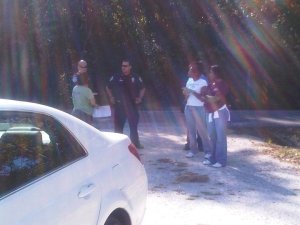
That whole situation was a mess.  Both sides were wacko.  She was wacko because she felt like the owner owed her something.  No ma’am.  Her organization should have done their due diligence to ensure they understood where the property was.  So she kept calling this man a bad person because he didn’t want to lease her the land for the three months it would take to reap the harvest.  It’s his land so he has a right to say no.  But going by her behavior and attitude when the owner pulled up (she was even rude to the police who weren’t at all mean when they pulled up), it’s clear that she was not pleasant ever in the situation.  So much for the attracting bees with honey because I’m sure when he (a black man) first pulled up to ask what they were doing, a group of white and Latino people working on his land, they probably acted like he was the one who is crazy.  He ordered them to move the garden asap. Now he’s crazy too, though.  First of all, she did him a favor really because the land was very much not taken care of before they made their mistake, so he really won out on that end of the spectrum.  However, he ordered her to move the land, but was threatening to charge her with trespass that morning (not us, her, lol–we 15 were not going to jail over voluntarism.  No. indeed.).  Well, sir, she can’t move the dang garden by osmosis.  We had to be on the property to uproot it all.  Once we, the sane and calm and unbiased black people, explained that to him and the police, though, he exhaled, still a little tightly wound, but just said it needed to be gone by the next day.

So my group of 15 had the task of moving a sign that had been cemented in the ground, uprooting a fence, clearing the land on the property that actually was for them (and by clearing I mean moving loads and loads of vines and trash), preparing it for soil, digging up and moving the soil from the original garden, and finally, moving and replanting the crops. It was very hard work, let me tell you, and the project leader was more like an overseer or slave master than a volunteer coordinator. She was barking orders at us and showed little to no appreciation even though we did in 5 hours what took weeks.  I think I knew it was a wrap when she asked us to relieve the Dillard students who had only been there for an hour compared to our four, and wanted us to stop planting to start back digging.  Oh, and did I mention she had stopped working because some students from Princeton had come to interview her for a study they’re doing about farming and community gardens.  Did I mention that the owner of the land of the first garden is attempting to sell it to a mechanic shop (we found that out from a neighbor)?  So… if that happens, surely the garden will not survive behind that. We left feeling borderline defeated and wondering if we had wasted a day.

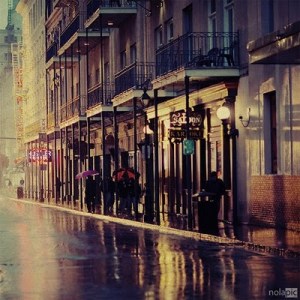
The bright side of things is that the whole group felt some kinda way after leaving so we decided to unwind at a nearby daiquiri shop, where we played some New Orleans classics (so classic that the owner of the shop turned the music up louder and customers were coming in bobbing their heads–woot woot for the DJ (me)) for a friend who had never been to New Orleans, had Jello shots, played pool, and of course, drank daiquiris.  The girls left there and went to a nail salon.  We keep it pretty, yanno.  We have no idea what the guys were up to.  Later, we went to the Quarter, ate heartily, then looked at all the Halloween costumes on Bourbon St.  It was a great night.
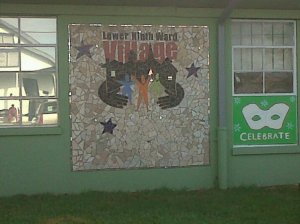
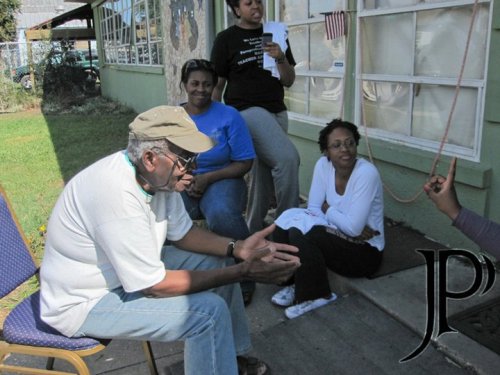
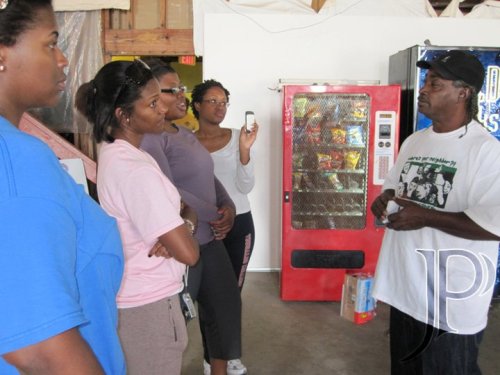
Sunday was a totally different experience, however. We went to the Lower 9th Ward, which is one of the most affected parts of the city because it’s near the levees. When we arrived at the Lower 9th Ward Village (which I plan to feature this Friday), we were all wary, ready to leave the project, straight throw the deuces, as soon as we were done with our assignment. Turns out we stayed 2 hours longer than the project was supposed to be. The morning started with an inspirational introduction from the Village CEO Mac McClendon, who started the community center to help his neighborhood after losing all his material things, including a house he had spent months renovating with his own hands. He explained to us what he went through during the storm and its aftermath, looking for his family, dealing with the smell of death when he returned, finding out that silence is a deafening sound. He said that hearing a car was a treat because there were literally no sounds—no birds chirping, no dogs barking, no crickets chirping, nothing. Out of hopelessness, he found his purpose in life and now, he’s running this center, still rebuilding his own life, but giving to his neighbors. Because there’s a law saying that if the grass is over 18 inches, a lot can be seized, we spent our morning cutting grass and weeds. Although the project wasn’t as “glamorous” as creating a garden, we felt like we had become a part of this community. After we were done, we spent two hours talking to Mr. McClendon about his life and experiences, with his younger brother who is the Program Director at the center, and with a couple of elderly residents who just wanted to pick our brains and get us thinking. We didn’t want to go, but we had to so that we could get home.  Here’s a link to a clip of the convo we had with Mr. McClendon.
The difference between those two projects illustrates the true meaning of community building—we volunteer, but why? To do good, yes, but more importantly, to build and restore communities. When I go back to New Orleans again to work, I’ll definitely be going back to see what my new friends at the Lower 9th Ward Village need. I won’t give up on helping other parts of the city, but I definitely want to dedicate at least part of my time to the ongoing efforts in the Lower 9th Ward.  I hope that next time you will come with us. 🙂  Here are links to the pictures.  Oh the memories.

Ranada’s Reads and Reels FB Photo Album

J Photo Group’s Flickr Album

MLM: What’s Your Dream?

MLM: What’s Your Dream?

Well, my dream is to make a profound positive impact on the black community. And through Reads and Reels, I can see some of that coming to fruition.  This weekend, I led a group of 15 volunteers in New Orleans as we participated in the ongoing rebuilding efforts.  It was a humbling, educational, inspirational, reassuring, lesson-learning, comical, friendship-building time, and I’m so glad that I had the idea and acted on it.  I’ll definitely be doing it again very soon.  I’m uploading pictures and sharing stories over the next few days.

For Memory Lane Monday, though, I want to share this piece I sent to friends on May 4, 2007 after a sermon I heard.

“Look, this dreamer is coming!…Let us…kill him.” Genesis 37:19-20

What’s your dream?

Everybody has a dream.  What’s yours?  If you could do anything, what would it be?  Most of us don’t achieve great things because we give up, we fall short, we get off track, we settle, or we dream too small.  Only two things stand in your way: dreaming it, then doing it.  Have you dared to dream, really dream?  If something is within your apparent reach, it isn’t a dream.  If it doesn’t stretch you, cost you, or involve risk, it isn’t a dream.  Dreams change you even as they change the world around you.

Maybe you’re listening to critical people. Remember the story of Joseph?  He dreamed big dreams.  God-given dreams.  And what was the response of his brothers?  They said, “Look, this dreamer is coming!… let us… kill him.”  People who aren’t pursuing their own dreams are usually the first to criticize people who are.  So, who are you listening to?

Maybe you’re afraid to dream too big. You don’t want to fail.  Nobody does.  But “safe living” leads to regret.  Theodore Roosevelt said, “Far better it is to dare mighty things, to win glorious triumphs, even though checkered by failure, than to rank with those poor souls who neither enjoy much nor suffer much because they live in the gray twilight that knows neither victory nor defeat.”  What’s the worst thing that could happen if you pursue your dream and don’t achieve it?  You could end up where you are now.  And what’s the best thing that could happen?  You could find yourself in new territory, enjoying new blessings, living the life God meant for you to live!

So, what’s your dream?  Are you pursuing it?

Feature Friday: Asheville, NC

Feature Friday: Asheville, NC

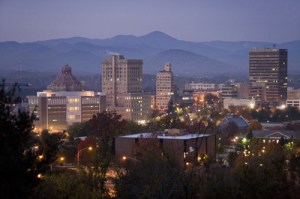
I’m currently in Asheville, NC, to attend an economic development research conference.  It is absolutely beautiful here. Just what the doctor ordered. Getting to explore and experience various communities is one of my favorite parts of my job.  I get to see (and help guide) what communities are doing to make themselves better while keeping the culture that makes each community so special.

Yesterday, I went on a trolley tour of the city, and despite the wind aggravating my current throat ailment, I really enjoyed it.  Asheville is full of so much history and beautiful architecture.  Downtown reminded me of a little European city.  Our tour guide said this is a city for the wacky, wild, and whimsical.  Sounds like my kinda place, right? I ate at the snazzy Grove Park Inn, which had awesome views of the Asheville landscape.  In addition to great conversation with colleagues, the food was yummo.  I had a porkchop with “FROG” jam.  FROG = figs, raspberry, orange, and ginger and a delectable dulce de leche creme brulee.  (Can you say good sleep?)

Well, you know me–Ilove to share the wealth.  Here are some interesting facts about Asheville.

  • During the Great Depression, Asheville had the highest debt per capita of any city in the entire country.  On Nov 20, 1930, four banks closed their doors.  But instead of squiggling out of it, Asheville officials vowed to pay off every single dollar of debt.  They finally got out of debt in 1977.  As a result, they have a charming skyline–they weren’t able to build any buildings or tear any down.  So by ’77 they had a bunch of great historical buildings hat probably wouldn’t have been there otherwise. They took advantage and invested in the preservation of them, and now they’re reaping the benefits.
  • The French Broad River, the 3rd oldest river in the world, runs through Asheville.
  • Asheville’s Biltmore Estate is the country’s largest privately owned home.
  • Writer Thomas Wolfe was from Asheville. (And who knew the guy was 6’7″?)
  • F. Scott Fitzgerald and his wife Zelda lived in Asheville.  Zelda was quite a character from what the tour guide told us.
  • Asheville has a history of being a health destination.  There’s lots of specialty and alternative medicine here.

If you need to get away, I highly recommend Asheville.  Bring your mom as I plan to do for a mother-daughter weekend, bring a boo for a romantic getaway, bring your artsy friends for an arts excursion, bring your outdoorsy friends for a mountain experience.  Lots to do here, and lots of stories to hear.  I’m sure I’ll be back soon.

So I’ll leave you with a song from an area native with a smooth, buttery voice. After “Closer I Get to You,” this is my fave of her songs.

Happy Friday, hunnies!

Almighty Debt

Almighty Debt

So last week, Reads and Reels along with TEO hosted an advance screening of CNN’s Black in America: Almighty Debt, which is airing in full tomorrow night. The event was well-attended, and people definitely had lots to say about the segment.  Here are some highlights.

  • Many people in the group, while they appreciated the topics touched on in Almighty Debt, felt that there should have been an added focus on those who have triumphed over debt.  They expressed that instead of showing all our problems, showing people who have overcome debt issues would have provided some hope to the watchers.  Some people thought the segment was realistic, and some thought it didn’t represent enough of the black diaspora.
  • In the piece, Pastor Soaries said that debt is a bigger problem than racism.  Some agreed, but others did not.  One attendee said that this debt problem is a byproduct of racism, and that there are still systems that encourage a disproportionate affect on our community in comparison to others.  She even made reference to a quote from the first Black in America: “When America has a cold, Black America has the flu.”  In essence, financial issues affect us greater–as Julianne Malveaux said during her interview, many of us are middle class by income, not by wealth.  So when stuff happens, we don’t have as much cushion, and we’re more easily knocked out of middle class.  It’s troubling that the wealth gap between whites and blacks is $75,000.
  • One point that was made over and over again in the segment as well as in our discussion is that we get emotionally attached to our stuff.  Due to a long history of not having much, it was said that we spend a lot of our money trying to catch up and show that we’re worthy of having stuff — stuff, as in houses, cars, clothes, designer purses, etc., that we can’t or won’t let go of when times get tough.  I shared with the group that in 2007, black buying power was $845 billion and was expected to top $1.1 trillion by 2012.  What are we doing with this money?  Why aren’t we leveraging it? Why are we buying tons of stuff instead of investing in our communities, in black businesses, in our education systems, in programs that will help us?
  • One very important topic of this new segment of Black in America is the church’s role.  Should the church be focused on salvation–getting people to heaven–or should it also be teaching and advocating for our communities–helping people on earth?  (Y’all know I think it should be doing both.)  The church, which used to be the single most important institution in our communities, should be investing in building up our communities.  I am in support of those churches, including the one in the documentary, who have community foundations that buy property and help people find jobs and teach financial literacy and help people get out of debt and hold entrepreneurship workshops and the like.  We need to think beyond our individual selves and get back to thinking long-term for our community.  We know what many of our problems are–so let’s get to fixing them.

There was so much more that was said, and there is so much to be said–and to be done.  Overall, I think the screening, and I’m sure the complete show tomorrow, fulfilled an imperative purpose: to get us talking about what we need to do become better financially.  It’s a personal and community problem–we each have a responsibility to get our own lives in order and make better decisions; and we all need to chip in and do something to position future generations to be better stewards of money and to understand how to build wealth, not just increase income, or as one participant said: “make money while we sleep.”

One thing that I’d like to see expanded and implemented to a wider audience is our ESP Kids Club, where members of TEO along with some brothers of Alpha Phi Alpha teach middle school kids on Saturdays about financial literacy.  The program is so enriching that some parents have asked to sit in because their kids were going home sharing information that the parents didn’t know!

There’s an information gap from which our community suffers gravely.  We need to fill it in order to empower the black community economically.  We have to have the foresight to ensure that our $1.1 trillion will be spent creating products, innovating, and growing assets, not just being consumers.

Feature Friday: Small Businesses

Feature Friday: Small Businesses

I’m no stranger to the pros and cons, benefits and trials of owning a small business.  In addition to my own small endeavors over the years, I was exposed to entrepreneurship as a child.  My granddaddy opened Robinson Shoe Shop in 1957, and it is now operated by my daddy and one of my uncles.  I’m sure this is one of the major reasons that the passage of the Small Business Jobs Act this week was important news to me, besides the fact that statistics show that small businesses are the source of a large chunk of the jobs in this country and are important to economic development.  They are also necessary in the community development of black communities.  Part of economic empowerment is generating and producing, not just consuming.

So today, my feature is two-fold: The Small Business Jobs Act and the film Harlem’s Mart 125: The American Dream.

I saw the film in late August on a Sunday afternoon at Central Library.  Not knowing that I had just said excuse me and stepped over the film’s creator, I sat in my seat and through the grainy cinematography (which I understood is an byproduct of a one-woman budget!! How passionate and awesome is that?), learned about an establishment that was not only the lifeline of several hard-working black business owners but also to the entire community in which it was located.  The film chronicles how the Harlem’s Mart 125 in New York became to be such a force and how the business owners were let down by the society and government that tells us that we have to get up and get our own.  It saddened me to see the disinvestment of the building, despite the fact that the businesses had been there for years, attracting and maintaining customers and staying relevant to a degree through the times.  Then came the gentrification of the area, which led to the government supporting new chain businesses while not providing support for the anchors that had been holding the community up the whole while.  The creator, Rachelle Salnave-Gardner, showed us that sometimes we really just get the short end of the stick–and that short end begets so many other implications for the business owners, their families, their customers, and the culture of the community.  If you get a chance to see or host this film, I encourage you to take it.

So what does the new bill that President Obama signed this week mean?  Additional loan availability, increases in the loan amounts, a higher tax deductible  for start-up businesses, tax deduction on health insurance expenses, and lots of other stuff.  Here’s another link with some info.  I hope that people, especially black business owners and aspiring entrepreneurs, will take advantage of some of these newly passed opportunities.  We can’t control all the circumstances, but creating strong businesses and supporting those businesses hold much promise for the future of us all.

Happy Friday, folks!

The Plight of Our Black Boys -> The Plight of Us All

The Plight of Our Black Boys -> The Plight of Us All

I discovered this report published by the Schott Foundation today, and my heart is heavy.  Just take a look at some of these stats.

  • Nationwide, in 2008, white male students graduated at a rate of 78%, while black male students graduated at a rate of 47%.
  • The gap has widened–in 2006, white male students graduated at a rate of 75%, which means there was a 3% increase over the two year span.  Black male students graduated at a rate of 47%–no change.
  • The ten lowest performing states (including the district) for black males are: GA (where I live – 43% graduation rate), AL (42%), IN (42%), DC (41%), OH (41%), NE (40%), LA (39%), SC (39%), FL (37%) , and NY (25%).
    • Side note: 25%?!?! 25%, New York? Whoa!!!  The graduation rate for white males was 68%!  That’s a 43% gap!

Before I launch into my diatribe about the plight of our children, let me highlight some positives in the report:

  • The ten best performing states for black males are: ME (98%), ND (93%), NH (83%), VT (83%), ID (75%), MT (73%), UT (72%), SD (71%), NJ (69%), and IA (63%).
    • Side note: Now, this is good and all,… but I will have to pull the population data for these states to see just how many black male students were there in the first place. :-/
  • Two of the best performing large districts for black males are in GA: Gwinnett County (58%) and Cobb County (51%).

Now, listen, I know that everything in this report can’t be fully analyzed (and please remember that this report provides more than just graduation rates–it also has reading and math test average scores, advanced placement, special education, and discipline data) until they are put in context (I do this every day for a living).  BUT, at the surface, it’s obvious that we have a problem, a serious one.  Here are my initial thoughts in reaction to this report.

:: Coupled with the incarceration rates of our black men, this is certainly alarming.  Our futures are in jeopardy if we can’t reel this on in.  When folks start droning on and on about the plight of the educated black woman, this is the stuff we really need to be focused on–the root of these problems.  If you think black women can’t find suitable mates, then we need to figure how to reverse this–not let it fester and perpetuate.  The black community is at danger when we can’t get our kids through the bare minimum level of schooling.  And we’ve known this, right? But now, here it is staring us in the face through this report. So what we gone do now?

:: Yes, it’s time for my me vs. we soapbox.  So many of the black community’s problems are embedded in the fact that we have become so disjointed from each other.  So many of us go day to day thinking about only ourselves and our short-term happiness.  And while those are certainly valid thoughts, we should also be thinking about our community and our collective long-term happiness.  Yes, the parents are responsible for their kids, but I still believe the African proverb that it takes a village to raise a child.  We need to be reaching out to those less fortunate than us through mentorship and even advocacy.  Give up a weekend to volunteer with an organization that focuses on our youth.  Skip a couple of coffee breaks and donate that money to charity or your alma mater or to buy a book for a neighbor’s child.  There are so many ways we can get beyond ourselves and redevelop our interconnectivity.  And that’s vital.

:: Black folks aren’t the only ones that should be worried about this.  Listen here–the performance of each and every one of our kids is factored into the overall graduation rate. Guess what–if we can get these rates up, the overall rate will increase as well.  How can we expect to have competitive communities if we aren’t effectively training our future workforce? It’s no wonder (besides other educational factors) that the U.S. has gone from #1 to #12 in college completion rates for young adults in one single generation.  This has a direct impact on how competitive this nation is compared to other countries.  As I’ve said time and time again, what we do for our kids today molds what our society will look like tomorrow.  And guess what–you can support the cost of quality public education today or you can support the cost of programs that support the unemployed and those not even in the labor force tomorrow.  You can run, pulling your kids out of school and putting them in private schools instead of getting involved with the local school board and making your concerns heard through local politics, but trust me, you. cannot. hide.  Uneducated kids grow up to be uneducated or miseducated adults. (Sidenote: I mean, educated kids can grow up to be miseducated as well, but that’s not relevant to today’s post, so moving on…) We cannot continue to be okay with shortchanging our kids.

:: Y’all know I’m not a problem-oriented person. I’m solution-oriented. So what do I want you to do?  I want you to read this report and really think about the repercussions. Tell me how you feel about it in the comments.  Then I want the mentors, tutors, volunteers, philanthropists, and advocates out there to keep doing what you do, and I want the teachers to continue going into those classrooms and busting your patootie everyday even though you are likely underappreciated.  I want you guys out there to continue (or start) reading the news and keeping up with issues like this one that impacts us so adversely.  And I want anyone who is looking for something to do to become a mentor.  You don’t have to be well off to be a mentor. Join Big Sisters/Big Brothers or go through your district to see what opportunities are available or take some interest in someone at your church and be a light in a kid’s life.  Show them that they are cared for and encourage them to be their best.  Just because you can.  It only takes an hour here or there to make a difference.  Do your part.

My Kinda Weekend

My Kinda Weekend

This is what weekends are made of.  I’ve been on a cultural excursion all weekend!  I’ll be back later to talk about them all, but here’s a taste.

It’s National Black Arts Festival week, and I took part of some awesome offerings.  Friday, I attended the screening of Soundtrack of a Revolution, which is a documentary that highlights how music played such an important role in the Civil Rights Movement.  Here’s a trailer.

After that, I rushed over to the Symphony Hall to see the To Curtis with Love tribute concert for Curtis Mayfield.  My favorite Curtis Mayfield song, “Makings of You” was performed by Dionne Farris.  My favorite undergroundish artists, Joi and Van Hunt, were there, along with Frank McComb, the Impressions, and Eddie Levert.  It was a great time.

Yesterday, I went to see The Sorcerer’s Apprentice, which I really enjoyed. Then I went back to the Rialto to view 41st and Central: The Untold Story of the L.A. Black Panthers.  Man, it was really a wonderful, captivating documentary.  I have always admired certain aspects of the Black Panther Party for Self-Defense, and I’ve looked up to some of its leaders, but I never even knew about Bunchy Carter, who was a really impressive man.  The documentary took us from the beginnings of the Southern Cali chapter of the Black Panthers to the disbanding of it. Here’s the trailer.

After the documentary, I was able to listen to a panel discussion featuring Chuck D, Kathleen Cleaver, Wayne Pharr, the producers of the documentary, and a couple of US organization representatives.  My favorite quotes of the night were from Chuck D:

“If you don’t identify your enemy, how the hell are you gonna fight?”

“Racism comes out every year like a new model car. We have to recognize it and know how to respond.”

So much more to read, research, and consider.  I’m so happy I was able to participate in this event.  My favorite quote in the documentary was

“If you want to be a revolutionary, you have to study revolution.”

Today (and on Thursday as well), I am volunteering for I Dream, a musical production about the life and works of Dr. Martin Luther King, Jr.

As the weekend comes to a close, I appreciate all the mind-expanding, thought-provoking activities I have access to.  Didn’t I just say the other day how awesome my life is?  Happy Sunday, people.